

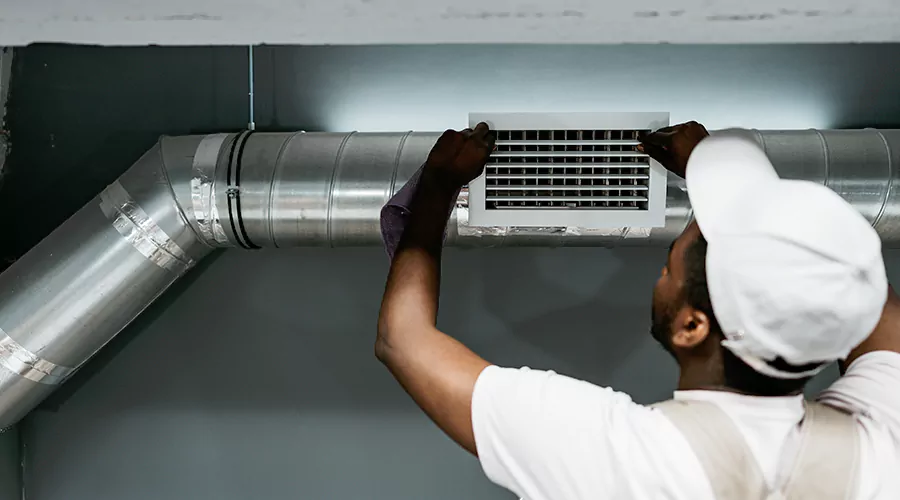
You can clean dirty air vents by switching off your HVAC system, removing loose dust with a vacuum and washing removable vent covers with mild soapy water. Most accessible household vents take approximately 10 to 20 minutes to clean, although heavily soiled covers may require additional time. The important step is removing dust without pushing debris deeper into the ductwork.
Air vents collect particles from normal household activities and constant air circulation. Over time, dust can settle between grille openings and form visible deposits on nearby surfaces. Cleaning these areas regularly helps keep the covers clear and makes it easier to notice unusual staining or debris. However, cleaning a vent cover is different from cleaning an entire air duct system.
The best approach depends on the location of the vent and the material used to make its cover. Metal and plastic grilles can often tolerate gentle washing, while wooden registers require more careful treatment. Understanding these differences helps prevent damage during routine cleaning.
What Do You Need to Clean Dirty Air Vents?
Cleaning dirty air vents requires only a few basic household tools when the buildup is limited to accessible surfaces. A vacuum removes loose particles while a damp cloth helps lift deposits that remain attached to the grille. Using gentle cleaning methods protects painted finishes and prevents unnecessary damage.
Before starting, examine the vent cover to determine how it is attached and whether it contains movable louvers. Some floor registers lift out without tools, while wall and ceiling grilles are secured with screws. If the cover contains electrical components or appears damaged, do not treat it like an ordinary removable grille.
The following supplies are useful for routine cleaning:
- Vacuum cleaner with a soft brush attachment and crevice tool
- Microfiber cleaning cloths
- Mild dish soap and warm water
- Soft-bristled brush or an old toothbrush
- Screwdriver that matches the mounting screws
- Small container for removed screws
- Flashlight for examining the accessible duct opening
A vacuum with effective particle filtration is useful because it helps capture fine dust during cleaning. Avoid stiff wire brushes and abrasive cleaners, which can scratch vent covers or damage their protective finish. Strong chemicals are unnecessary for most ordinary household deposits.
How to Clean Dirty Air Vents Step by Step?
The safest way to clean air vents is to remove loose dust before applying any moisture. This prevents dry particles from becoming a paste that is harder to remove. The cleaning process should focus on the grille and the visible duct entrance rather than the concealed duct system.
Step 1. Turn Off the HVAC System
Start by switching the heating or cooling system off at the thermostat and waiting for the blower to stop. This prevents moving air from scattering dust while you work around the opening. It also makes it easier to see where loose material has collected.
Make sure the thermostat is not set to run the fan continuously. If you are cleaning a ceiling grille, protect nearby furniture from falling dust before beginning. Avoid opening electrical equipment or removing access panels that are unrelated to the vent cover.
Step 2. Remove Loose Dust From the Vent Cover
Use the vacuum's soft brush attachment to collect dust from the grille before attempting to remove it. Move the attachment slowly across the openings so loose particles enter the vacuum instead of spreading into the room. Pay particular attention to narrow corners where dust tends to collect.
For wall or ceiling vents, clean the exposed surface while the cover remains attached. This reduces the amount of loose dust that may fall when you remove the grille. If the vent is too high to reach comfortably, use an appropriate extension attachment from a stable position.
Step 3. Remove the Vent Cover Carefully
Check how the grille is secured before applying pressure. Many floor registers simply lift out of their openings, while wall vents commonly use mounting screws. Support the cover while removing the final screw so it does not fall or damage the surrounding surface.
Place the screws in a small container and remember the original position of any adjustable louvers. If a grille has been painted into the wall, avoid forcing it loose because doing so can damage the paint or drywall. Cleaning the visible surface without removing the cover is safer when removal would cause damage.
Step 4. Wash the Removable Grille
For washable metal or plastic covers, prepare a small amount of mild dish soap in warm water. Use a soft cloth or brush to remove deposits from the front and back of the grille. Heavily soiled covers may benefit from a short soak when their material and finish allow it.
Avoid abrasive pads because they can remove protective coatings and expose metal to corrosion. Wooden covers should not be submerged because water can cause swelling or damage the finish. Use a lightly damp cloth on wood and dry the surface immediately.
Step 5. Vacuum the Accessible Vent Opening
Once the grille is removed, use a flashlight to inspect the visible opening. Loose dust may have collected near the edges or directly beneath the cover. A vacuum crevice attachment can remove material that is clearly visible and easy to reach without scraping the duct surfaces.
Do not force the hose around bends or push attachments deep into flexible ductwork. Some ducts contain internal insulation that can be damaged by aggressive cleaning. If you notice damp material or substantial debris extending farther into the system, stop rather than attempting to remove it with household tools.
Step 6. Dry and Reinstall the Cover
After washing, remove remaining moisture with a clean towel and allow the cover to dry completely. Water trapped against metal surfaces can contribute to rust, while moisture entering the duct opening may create additional problems. Check narrow corners and movable louvers before reinstalling the grille.
Return the cover to its original position and tighten the mounting screws until secure without overtightening them. Make sure any adjustable dampers remain in their previous position unless you have a specific reason to change them. Once everything is secure, restore the HVAC system to its normal setting.
Step 7. Check Airflow and Remaining Dust
After the system restarts, observe whether the vent delivers or receives air as expected. Listen for unusual rattling and check whether the cover sits securely against the surrounding surface. Compare the cleaned opening with nearby vents to determine whether the remaining dust is limited to another area.
A clean grille should no longer have thick visible deposits across its openings. It is normal for some dust to return with everyday household activity. If substantial particles immediately blow into the room, the source may extend beyond the accessible vent cover.
How Should You Clean Different Types of Air Vents?
Different vent materials and locations require slightly different methods because they are exposed to different kinds of buildup. A floor register may contain loose debris that has fallen through its openings, while a ceiling grille may have light dust attached to its edges. Choosing the correct cleaning method reduces the risk of surface damage.
| Vent Type | Common Buildup | Recommended Cleaning Method |
|---|---|---|
| Metal supply vent | Dry dust and surface residue | Vacuum and wash gently if the finish allows |
| Plastic vent cover | Dust trapped between louvers | Soft brush and mild soapy water |
| Wooden register | Surface dust and lint | Vacuum and wipe with a barely damp cloth |
| Return air grille | Dust across the openings | Vacuum both faces and inspect the filter location |
| Floor register | Hair and fallen debris | Lift cover and vacuum the accessible opening |
| Ceiling supply grille | Dust on louvers and edges | Use a soft brush or suitable extension tool |
One important difference involves return air grilles that contain filters. The filter should be handled according to the HVAC equipment's instructions rather than washed with the cover unless it is specifically designed to be washable. A disposable filter must be replaced instead of rinsed.
For decorative grilles, inspect the finish before applying cleaning products. Painted metal and coated plastic can lose their appearance when exposed to strong solvents. Gentle cleaning is usually sufficient for ordinary household dust.
How Can You Clean Air Vents Without Removing the Covers?
Air vent covers do not always need to be removed for routine cleaning. If the dust is limited to the exposed grille, a vacuum and damp microfiber cloth can remove most visible buildup. This approach is particularly useful for painted wall registers or ceiling vents that are difficult to access.
Begin with the HVAC system switched off and vacuum the grille using a soft brush attachment. Move across the louvers slowly and repeat the process where dust remains trapped around the edges. Next, wipe the accessible surfaces with a lightly damp cloth while avoiding excess water near the opening.
For narrow spaces between louvers, use a soft toothbrush or microfiber cloth wrapped around a suitable cleaning tool. The purpose is to reach exposed surfaces without forcing anything into the duct. If thick material remains behind the grille, removing the cover may provide better access when it can be done safely.
This method is convenient for maintenance between deeper surface cleanings. It will not remove deposits located far inside the duct system, and it should not be presented as a replacement for cleaning contaminated internal components.
What Cleaning Mistakes Should You Avoid?
Cleaning mistakes can damage vent covers or spread dust farther into the home. The most common problems involve excessive moisture and unsuitable tools. Working too aggressively may also damage flexible ducts or internal insulation even when the vent opening appears easy to access.
Avoid these common mistakes:
- Cleaning while the HVAC system is operating. Moving air can scatter particles while the cover is removed.
- Spraying cleaners into duct openings. Liquid products may contact materials that should remain dry.
- Using stiff wire brushes. Aggressive bristles can scratch painted covers and damage internal duct surfaces.
- Soaking wooden registers. Excess water can cause swelling or deterioration of the finish.
- Reinstalling damp covers. Remaining moisture may contribute to corrosion or staining.
- Forcing vacuum hoses deep into ducts. Internal insulation and flexible duct materials may tear.
- Ignoring unusual contamination. Pest debris and suspected mold require a different approach from ordinary surface dust.
- Leaving openings uncovered after cleaning. A missing grille can allow objects to enter the duct or leave an opening that presents a safety hazard.
Another common mistake is assuming that a dusty grille proves the entire duct system needs cleaning. Dust naturally collects around return openings because room air passes through them before reaching the HVAC filter. The amount and location of debris should determine the next step.
How Often Should You Clean Air Vents?
Most homeowners can inspect air vent covers during routine household cleaning and remove visible dust as needed. A more detailed cleaning every three to six months is a practical starting schedule for many homes. However, the right frequency depends on how quickly deposits return and the amount of dust produced by normal household activity.
Homes with pets or frequent foot traffic may need more regular attention to floor registers and return grilles. Renovations can also create temporary buildup that requires cleaning sooner than usual. The goal is to keep the openings clear rather than follow a rigid schedule when no buildup is present.
| Household Condition | Suggested Inspection or Cleaning Approach |
|---|---|
| Light household dust | Inspect monthly and clean when deposits become visible |
| Pets or frequent indoor activity | Check high-traffic vents every two to four weeks |
| Recent remodeling work | Inspect after construction dust has been removed |
| Visible lint covering a return grille | Clean promptly and inspect filter condition |
| Moisture or unusual residue | Identify the cause before routine cleaning |
These periods are suggested housekeeping intervals rather than mandatory HVAC maintenance requirements. Filter replacement schedules should follow the filter and equipment instructions because the correct interval is different for each system.
When Should You Call a Professional for Air Vent Cleaning?
Professional assessment becomes appropriate when substantial debris repeatedly blows from supply vents or when visible contamination extends beyond reachable surfaces. Pest evidence and suspected significant mold growth also require investigation. These conditions involve more than ordinary dust on a removable grille, and the underlying cause should be identified before cleaning begins.
A qualified HVAC technician can inspect the filtration system and check whether damaged duct connections are contributing to the problem. When deeper cleaning is justified, specialized equipment can loosen internal deposits while collecting the material to limit its release into occupied rooms. The work may also involve components that cannot be reached through the vent opening.
Whole-system air duct cleaning is different from household grille cleaning. In 2026, reported U.S. project costs commonly fall around $271 to $509, although larger systems and more difficult work can cost substantially more. Cleaning an accessible cover with household equipment does not require that level of service.
Routine duct cleaning has not been proven to prevent health problems. The decision should therefore depend on identifiable contamination or other specific conditions rather than the presence of a light dust coating.
How Can You Keep Air Vents Cleaner for Longer?
Keeping vents clean requires reducing the particles that reach them during normal air circulation. Regular surface cleaning removes existing deposits, while proper filtration helps control material moving through the HVAC system. Addressing dust sources in surrounding rooms is often more useful than repeatedly washing the grille without changing household conditions.
Maintain HVAC Filters Properly
Inspect the HVAC filter about once a month during heavy heating or cooling use and replace it according to the manufacturer's recommendations. Make sure the filter matches the required size and sits correctly inside its housing. Gaps around the edges can allow unfiltered air to pass through unintended openings and contribute to dust collecting on downstream components. Avoid installing additional filters behind ordinary supply grilles because the extra resistance can interfere with designed airflow.
Reduce Household Dust
Vacuum carpets regularly and clean furniture using methods that collect particles rather than spreading them into the air. Pay attention to areas around return grilles because these openings draw air from the surrounding living space. During renovation work, protect the vents while the HVAC system is off and remove the coverings before normal operation resumes. Cleaning surrounding floors after dusty work also reduces the chance of particles returning to recently cleaned grilles.
Monitor Moisture and Damaged Covers
Inspect vents for condensation or damaged finishes during regular cleaning. A metal cover that remains damp may develop corrosion, while water stains around a ceiling opening can indicate moisture problems beyond ordinary dust. Replace severely damaged covers that no longer fit securely or cannot direct airflow as intended. Keeping the opening dry and properly covered helps prevent avoidable deterioration.
Conclusion
Cleaning dirty air vents usually requires only a vacuum and gentle washing of removable covers. The safest method removes loose dust before applying moisture and keeps cleaning tools near accessible surfaces. Routine maintenance helps prevent heavy buildup, but significant contamination requires further investigation. If unusual debris persists, professional inspection can help identify the source. This week, inspect your most frequently used vents and clean any visible deposits.